Advertisements
Struggling to afford electricity, water or municipal bills? Indigent Support could help reduce these costs. But qualifying depends on your household income, where you live and your municipality’s rules. Here’s how to check your eligibility, prepare your documents and find the correct application form.
Indigent Support eligibility: Who can qualify?
Indigent Support helps low-income households access essential municipal services, including water, electricity, sanitation and refuse removal. Some municipalities also provide property rates rebates.
⚠️ Indigent Support eligibility is determined locally, so requirements may differ depending on where you live.
Most municipalities consider the following:
- Household income: Your combined income must fall within the local qualifying threshold.
- Residence: You must generally live within the municipality and occupy the property as your main home.
- Identification: A valid South African ID or other documentation accepted under the local policy may be required.
- Household members: Your spouse, partner and other residents may affect the income assessment.
- Property ownership: Some municipalities consider property values or restrict applicants who own additional properties.
- Municipal account: You may need to be the registered account holder or meet a recognised exception.
Pensioners, child-headed households, residents of informal settlements and government-funded housing beneficiaries may qualify under special provisions.
For example, Cape Town’s 2026/27 policy provides for certain residential properties valued at R620 000 or less to be treated as qualifying, unless proven otherwise.
Other municipalities use different criteria, and some require individual applications even when households appear eligible.
Income limits: How municipal thresholds work
There is no single national income limit for Indigent Support. Each municipality sets its own threshold, which may change during the annual budget process.
Examples from municipal policies and guidance include:
| Municipality | Income threshold |
|---|---|
| Cape Town | Up to R7 500 per month |
| George | Up to four times the state pension for Level 1; up to six times for Level 2 |
| Mangaung | Three state old-age pensions, or another council-approved amount |
| Overstrand | Four times the government old-age pension plus R1 |
These are local examples, not national limits. George’s Level 2 support is also subject to funding and other municipal conditions.
What counts as household income?
Municipalities may assess:
- Salaries, wages and self-employment earnings.
- Pensions and other regular income.
- Rental and investment income.
- Social grants, where included under the local policy.
Some grants are excluded from income calculations. Cape Town, for example, excludes child support grants, foster child grants and Social Relief of Distress grants, among others.
The people whose income is counted can also differ. Some policies consider the applicant and partner, while others assess adult occupants.
📌 To check your current income limit, look for the Indigent Policy and Tariff Policy on your municipality’s official website. Confirm whether the threshold uses gross income (before deductions) and which grants are excluded.
Do SASSA beneficiaries and pensioners automatically qualify?
No. Receiving a SASSA grant or pension does not automatically guarantee Indigent Support.
Municipalities may still assess your household income, residence, property circumstances and supporting documents.
However, pensioners and social grant recipients may benefit from special rules:
- Cape Town: Certain social grants are excluded from income calculations. Qualifying older applicants may also receive extended registration validity linked to the property valuation cycle.
- George: Qualifying pensioners have indigent status valid for at least three years.
- Mangaung: Pensioners and people with disabilities do not need to reapply periodically under its policy, although verification continues.
- Overstrand: Its published guidance allows qualifying pensioners over 60 to deduct medical aid contributions when income is assessed.
If you receive a grant, keep your SASSA documentation available and check how your municipality treats that particular benefit.
🚨 Being a pensioner or SASSA beneficiary may help you meet certain requirements, but it does not replace the municipality’s eligibility assessment.
Can tenants or renters apply for Indigent Support?
Tenants may qualify in some municipalities, but not all. The answer often depends on who holds the municipal account and which charges the applicant pays.
For example:
- George: Ordinary tenants generally cannot claim indigent subsidies on municipal accounts held by property owners, except in limited circumstances specified in its policy.
- Mangaung: Eligible tenants registered as municipal account holders may apply for assistance with charges billed to them. Property rates remain the landlord’s responsibility.
- Cape Town: Special arrangements exist for certain social housing tenants, municipal housing occupants and backyard dwellers.
💡 If you rent, check whether your municipality accepts tenant applications and whether you need a municipal account in your name.
You may also need proof of residence, a rental agreement or written confirmation from the account holder.
Important: Paying a landlord for electricity or water does not automatically entitle you to a municipal subsidy.
Documents you may need for your Indigent Support application
Most municipalities require documents confirming your identity, income and living arrangements.
Use this checklist to prepare before applying.
Personal and household documents
- Valid ID or accepted proof of identification.
- IDs of relevant adult household members.
- Birth certificates for children, where required.
- Marriage or divorce documents, if applicable.
Income and employment documents
- Recent payslips or an employer’s income confirmation.
- Bank statements, commonly covering three months.
- Unemployment affidavit, if applicable.
- Self-employment income declaration, where required.
- SASSA grant or pension documentation.
Residence and property documents
- Latest municipal account or account information.
- Proof of residence.
- Property ownership documents or rental agreement, where applicable.
- Authorisation letter or affidavit if the account is held by someone else.
- Estate documents or death certificates in relevant inheritance cases.
Some municipalities require additional documentation. George’s 2026/27 policy, for example, specifies recent income records and affidavits with particular validity periods.
Cape Town’s application guidance also includes declarations about bank accounts and property bonds.
📋 Before submitting: Confirm which documents must be certified, how recent they must be and whether the municipality accepts alternative proof when a document is unavailable.
The final checklist must always come from your municipality’s current application requirements.
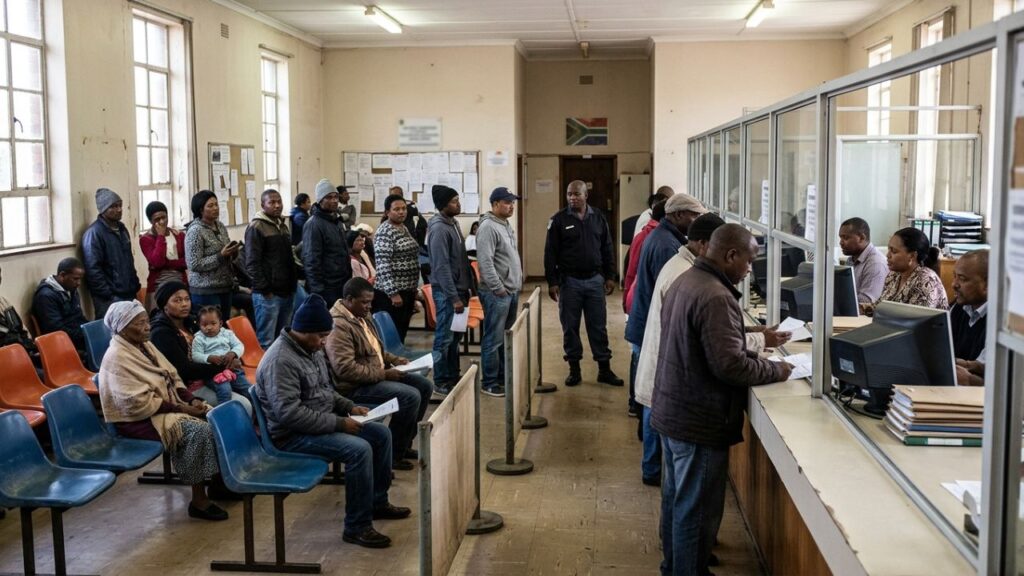
How to find the correct Indigent Support application form for your municipality
There is no universal Indigent Support application form for every municipality in South Africa.
The safest approach is to obtain the form directly from the municipality responsible for your residential address.
Step 1: Identify your municipality.
Check your municipal account or confirm which local municipality serves your area.
If you are unsure, consult the Municipal Demarcation Board to help identify the relevant municipal area.
Step 2: Search the official website.
Use a search such as:
[Municipality name] indigent support application form
🔎 Look for sections labelled Indigent Support, Free Basic Services, Customer Services or Downloads.
You can also consult official municipal websites, including:
These are examples, not the only municipalities offering assistance.
Step 3: Check that the form is current.
Before completing it, confirm:
- The form belongs to your municipality.
- The eligibility rules and income threshold are current.
- You have the required supporting documents.
- The municipality’s accepted application channels.
Step 4: Ask for assistance if necessary.
If the form is unavailable online, contact your municipality’s revenue department or visit a customer service centre.
Some municipalities provide electronic forms, while others assist residents with applications in person.
For example, Cape Town’s published guidance identifies [email protected] as an application submission channel, while George’s policy lists [email protected] as a contact.
⚠️ Confirm that any contact details remain valid before sending personal documents.
Once you have checked your Indigent Support eligibility, located the correct form and prepared your documents, you can move on to the application itself.