Anúncios
The Child Support Grant helps millions of South African families provide for their children’s basic needs. It is a monthly payment from the government.
This guide explains exactly who qualifies for the grant. We cover the documents you need and how long you can expect to wait for approval from SASSA.
Knowing the process puts you in control. Let’s get you ready to apply.
What Exactly is the Child Support Grant?
The Child Support Grant is a social grant from the South African Social Security Agency (SASSA). It is not a salary, but a form of financial assistance.
Its goal is to help lower income households. It provides money to the primary caregiver of a child to help cover essential living costs like food and clothing.
This grant acknowledges the financial pressure of raising a child. It aims to ensure children grow up in a healthier, more secure environment.
Who Qualifies for the Child Support Grant?
To receive the grant, you and the child must meet specific criteria set by SASSA. This ensures the support reaches those who need it most.
The main requirements focus on your role as a caregiver, your income level, and the child’s age and living situation. Let’s break it down clearly.
- Primary Caregiver: You must be the person mainly responsible for the child’s care. This can be a parent, grandparent, or even an older sibling.
- Citizenship: You must be a South African citizen, permanent resident, or a recognised refugee living in the country.
- Child’s Age: The child you are applying for must be under the age of 18.
- Living Arrangements: The child must live with you, the primary caregiver.
- Income Limit (Means Test): Your personal income must not exceed a certain amount. This is the most critical requirement.
- Both Parents: Both the applicant and their spouse must meet the requirements of the means test.
Understanding the SASSA Means Test for Income
The “means test” is how SASSA checks if your income is low enough to qualify. It is a strict rule to ensure fairness.
If you earn more than the set limit, your application will be rejected. The limits are different for single applicants and for those who are married.
Important: These income thresholds can change, so always check the latest figures on the official SASSA website before applying.
Here are the income limits you need to know:
- If you are single: Your annual income cannot be more than R52,800. This is about R4,400 per month.
- If you are married: Your combined annual income (you and your spouse) cannot be more than R105,600. This is about R8,800 per month combined.
If you are caring for a child that is not your biological child, and you receive no income, the means test might not apply in the same way. This often applies to foster parents.
Documents You Absolutely Need to Apply
Being prepared with the right documents will make your application much smoother. Without them, you will face delays or have to return another day.
Gather all these papers before you go to a SASSA office or service point. Make certified copies if you can, but bring the originals too.
For the Primary Caregiver (You):
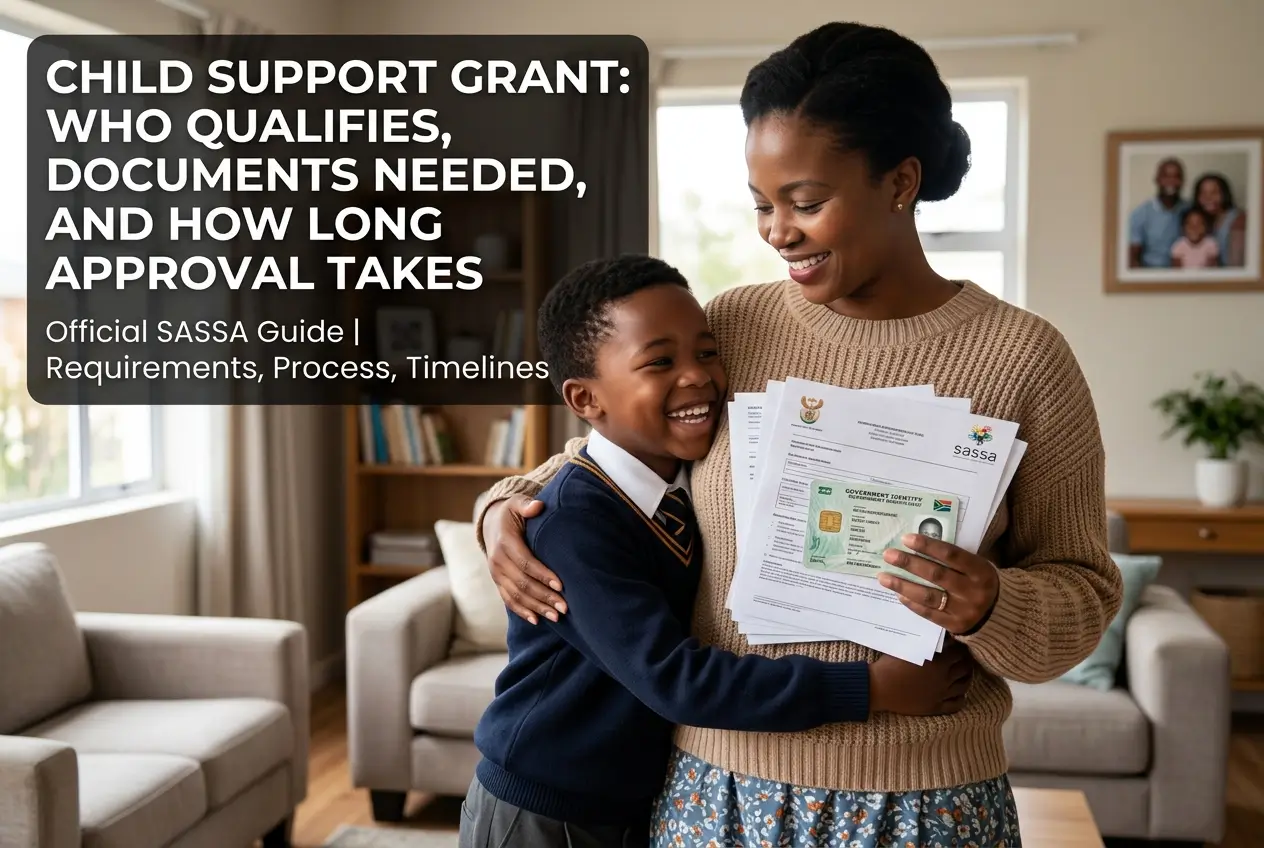
- ID Document: Your original 13 digit bar coded Identity Document. If you don’t have one, SASSA will help you apply for one with Home Affairs.
- Proof of Marital Status: A marriage certificate if you are married. If divorced, a decree of divorce. If your spouse is deceased, a death certificate.
- Proof of Income: Recent payslips, a letter from your employer, or bank statements for the last three months.
- Unemployment Proof: If unemployed, you need an affidavit from a police station. A UIF card (“blue book”) can also work.
For the Child:
- Birth Certificate: The child’s original birth certificate with an ID number. If you don’t have one, you must apply for one and submit proof.
- School Records: A school report card or clinic card to prove the child is in your care and in the country.
- Immunisation Card: The child’s clinic or road to health card is important.
Step-by-Step: How to Apply for the Grant
The application process must be done in person. You can go to your nearest SASSA office or a designated service point (some community centres or halls).
The process is free. You should never pay anyone to help you apply for a SASSA grant. This is a common scam tactic.
- Visit a SASSA Office: Find your local office and go there with all your documents. It is best to go early in the morning as queues can be long.
- Complete the Application Form: A SASSA official will give you the form and help you fill it out. This is done in the presence of the official.
- Submit Your Documents: The official will take your documents and check them against your application form.
- Get an Interview: You will have a short interview with the official to confirm your details and circumstances.
- Provide Fingerprints: Your fingerprints will be taken as part of the identity verification process.
- Receive a Receipt: You will be given a dated receipt with the SASSA official’s name. Do not lose this receipt. It is your only proof of application.
How Long Does Grant Approval Take?
Patience is key after you apply. SASSA has to verify all your information to prevent fraud and ensure the right people get the support.
The official processing time can take up to 3 months. During this period, SASSA checks your details with other government databases like Home Affairs and UIF.
You will not hear from them every day. The next communication will likely be to inform you whether your application was approved or rejected.
Good News on Back Pay: If your grant is approved, you will be paid from the date you first applied. This back pay covers the months you were waiting.
What to Do If Your Application is Rejected
It can be very disappointing to get a rejection letter. However, you have the right to ask SASSA to reconsider their decision.
First, read the rejection letter carefully. It must state the exact reason why your application was unsuccessful. This reason is crucial for your next step.
If you disagree with the reason, you can appeal the decision. You must do this within 90 days of receiving the rejection notice.
To appeal, you need to write a letter to the Ministry of Social Development. Your local SASSA office can give you guidance on how to submit this appeal correctly.
Important Responsibilities When Receiving the Grant
Once you are approved, you have certain responsibilities. The grant is for the child, and it must be used for their well being.
Failing to meet these responsibilities can lead to your grant being suspended or cancelled. It is important to keep SASSA updated.
- Report Changes: You must inform SASSA immediately if your financial or personal circumstances change. This includes finding a job or getting married.
- Ensure Child Attends School: The child must be enrolled in and attending school if they are of school going age.
- Cooperate with Reviews: SASSA may review your grant from time to time to confirm you still qualify. You must cooperate fully with these reviews.
- Do Not Commit Fraud: Never lie about your income or who is caring for the child. This is a serious crime with severe consequences.
How to Check Your SASSA Grant Status
Waiting can be stressful. Luckily, there are a few ways to check on the progress of your Child Support Grant application.
You will need your South African ID number and the cell phone number you used when you applied. Keep these ready.
- Online Check: Use the official SASSA SRD status check website. While it’s for the R350 grant, it often shows updates for other grants too.
- Moya App: The Moya App on your smartphone has a feature to check SASSA grant status without using any of your data.
- Call the Helpline: You can call the SASSA toll free number at 0800 60 10 11. Be prepared for long waiting times.
- Visit the Office: If all else fails, you can go back to the SASSA office where you applied and ask for an update using your application receipt.
With the right documents and a clear understanding of the process, you can successfully apply for the support your child deserves. Get your papers in order today.