Anúncios
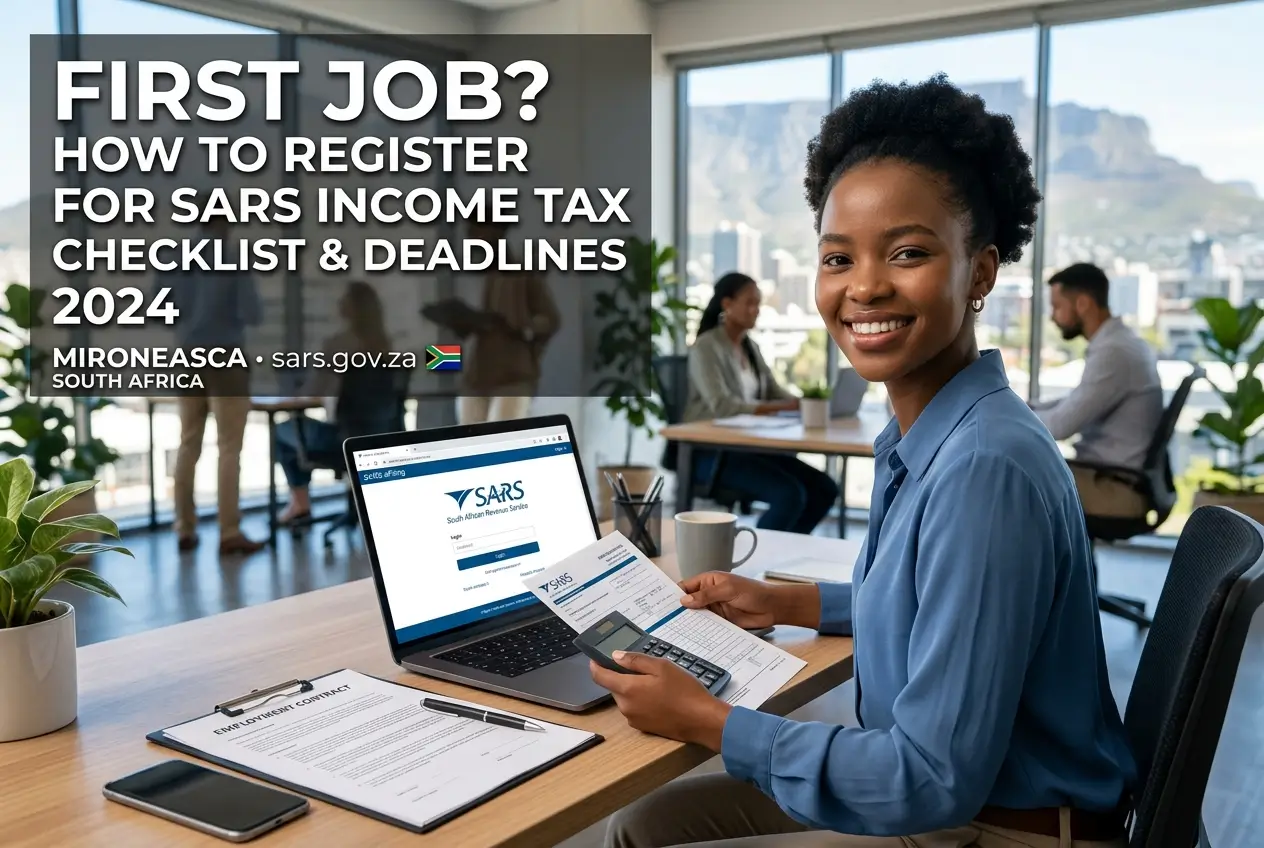
Got your first job in South Africa? Congratulations! Your next big step is to register for income tax with SARS.
This might sound complicated, but it’s a crucial part of earning a salary. Not doing it can lead to major headaches later on.
This guide will walk you through every step. We’ll cover why you need to register, what documents you need, and exactly how to do it.
Why Registering for SARS is Your First Big Money Move
Think of your tax number as your financial ID in South Africa. It’s a unique number that SARS gives you for life.
Without it, your employer can’t pay you correctly. They are legally required to deduct tax from your salary, and they need this number to do it.
If you don’t provide a tax number, your employer might have to tax you at a much higher rate. This means less money in your pocket each month.
Having a tax number is also essential for your financial future. You’ll need it to file tax returns, claim refunds, and even for things like applying for loans.
Key takeaway: Registering for tax is not optional. It’s a legal requirement and the first step to managing your career finances properly.
Do You Need a Tax Number? The Official Rules
So, who exactly needs to register for income tax? The rule is quite simple for new employees.
If you earn a salary, you need to be registered with SARS. This applies even if your income is below the official tax threshold.
The tax threshold is the amount of income you can earn in a year before you start paying income tax.
For the 2024/2025 tax year, the threshold for people under 65 years old is R95,750 per year. That’s about R7,979 per month.
Even if you earn less than this, your employer will still need your tax number for their payroll records. So, registering is a must for almost everyone with a formal job.
Your SARS Registration Checklist: Get These Documents Ready
Before you start the registration process, gather all your documents. This will make everything much smoother and faster.
Having everything on hand means you can finish the process in one go. Here is exactly what you will need.
- Your South African ID: A clear, certified copy of your green barcoded ID book or both sides of your Smart ID card.
- Proof of Address: A recent utility bill (like water or electricity) or a bank statement showing your name and physical address. It must not be older than three months.
- Bank Account Details: A bank statement or a letter from your bank confirming your account details (account number, branch code, etc.). This must also be less than three months old.
- Payslip: Your most recent payslip from your employer. This is important as it contains details SARS will need.
Make sure your certified copies are clear and easy to read. A poorly scanned document can cause delays in your registration.
How to Register for Income Tax Online via eFiling
The quickest and easiest way to register is online through the SARS eFiling platform. You can do it from your computer or even your phone.
Follow these steps carefully. The system is designed to be user-friendly, but it’s important not to miss anything.
- Go to the SARS Website: Open your web browser and go to the official SARS eFiling site at www.sarsefiling.co.za.
- Register a New Profile: On the homepage, look for a button that says “Register”. Click on it to start creating your eFiling profile.
- Complete Your Details: The system will ask for your personal information. This includes your ID number, name, surname, and contact details. Fill everything out accurately.
- Receive Your Tax Number: Once you complete the online registration form, SARS will verify your details. In many cases, you will be issued a tax number immediately.
- Upload Supporting Documents: The system may ask you to upload the documents from your checklist. Make sure you have clear digital copies (scans or good quality photos) ready to upload.
Once you are done, SARS will send your official tax registration number (your income tax number) to you via SMS or email.
Alternative: Registering in Person at a SARS Branch
If you’re not comfortable with technology or run into issues online, you can register in person at a SARS branch.
However, you can’t just walk in anymore. You must book an appointment online first. This is a very important step to avoid a wasted trip.
Warning: SARS branches do not accept walk-ins for tax registration. You must have a confirmed appointment booking number.
Here’s how to do it:
- Book Online: Go to the SARS website and look for the “Book an Appointment” option. You will choose a date and time that works for you.
- Gather Your Documents: Take all the original documents from the checklist above. Also, bring clear copies of each one.
- Complete the Form: At the branch, you will need to fill out a TCR01 form, which is the “Tax Compliance Registration” form. A SARS agent will help you.
- Attend Your Appointment: Go to the branch on your scheduled date. A SARS official will verify your documents and process your registration.
This process takes longer than registering online, but it’s a reliable option if you need face-to-face assistance.
What Happens Next? Understanding Your Tax Number
After your registration is successful, you will receive your 10-digit income tax number. This number is yours for life.
Keep it safe. You will need it every time you deal with SARS or when you change jobs. It’s as important as your ID number.
The very first thing you should do is give this number to your employer’s HR or payroll department. They need it to make sure your tax deductions are correct.
With this number, you are now officially on the SARS system as a taxpayer. This means you will need to submit a tax return every year during tax season.
Key Tax Season Deadlines You Can’t Afford to Miss
Registering for tax is the first step. The next is filing your annual tax return. Knowing the deadlines is critical.
Tax Season for individuals usually runs from July to October or November each year. SARS announces the exact dates annually.
During this period, you use your eFiling profile to declare all your income for the tax year (which runs from 1 March to 28/29 February).
Even if you think you won’t get money back, you are still legally required to file if you earn above the threshold. Missing the deadline can result in penalties.
Staying Safe: How to Spot and Avoid SARS Scams
Unfortunately, scammers often pretend to be from SARS to try and steal your money or personal information.
As a new taxpayer, you are a prime target. You must be very careful with any communication that claims to be from SARS.
Here are some major red flags to watch out for:
- Requests for Personal Info: SARS will never ask for your password, PIN, or bank account details in an email, SMS, or WhatsApp message.
- Threats and Urgency: Scammers often use threats of arrest or huge fines to scare you into acting quickly without thinking.
- Suspicious Links: Never click on links in emails or messages that claim to be from SARS. Always type the official website address directly into your browser.
- Fake Refunds: Be wary of messages saying you are due a surprise refund. Scammers use this to get you to enter your banking details on a fake site.
If you receive any communication that seems suspicious, report it to SARS immediately through their official channels.
Getting your tax affairs in order is a sign of financial maturity. Complete your registration and start your career on the right foot.