Anúncios
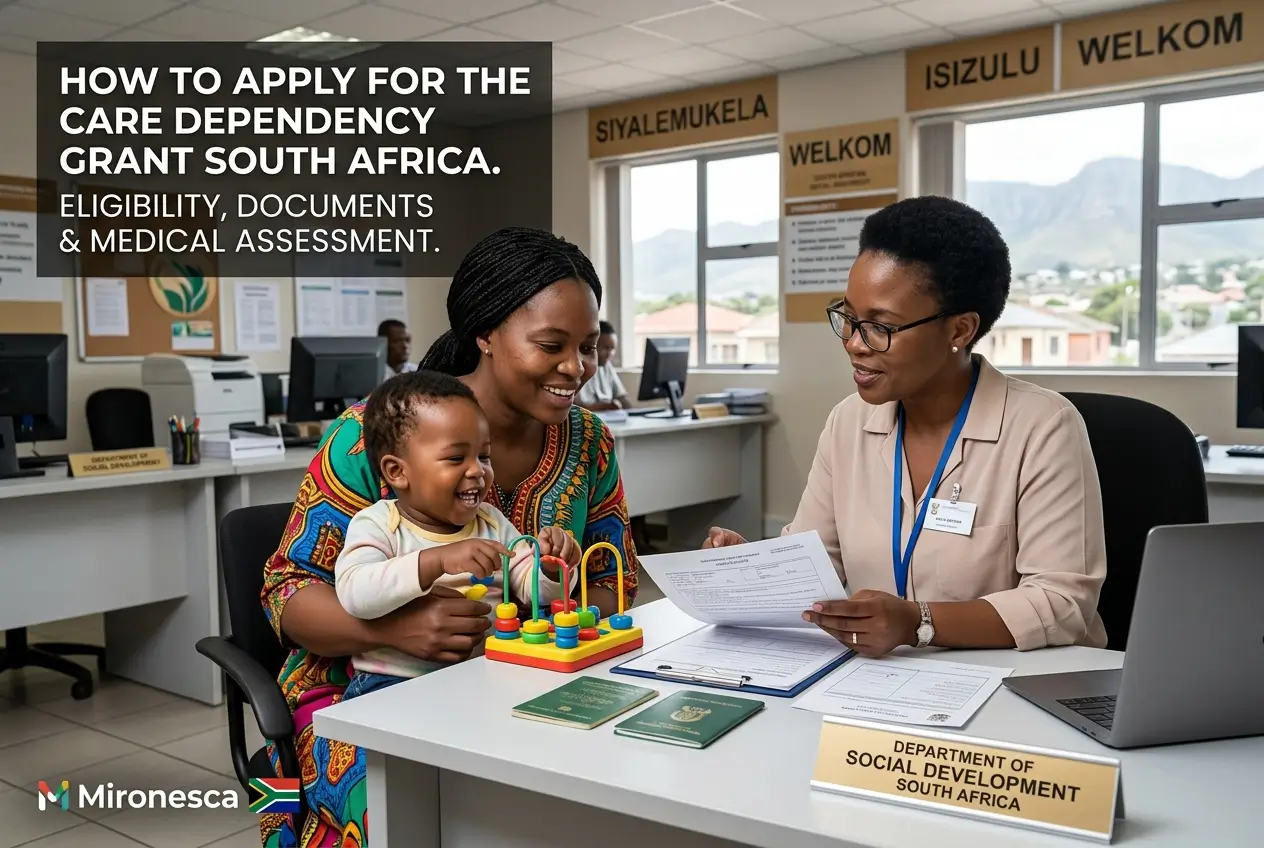
Caring for a child with a severe disability requires immense dedication. The Care Dependency Grant is here to provide financial support.
This grant, managed by SASSA, helps caregivers cover the special needs of children who require full-time care.
This guide explains exactly who qualifies, what documents you need, and how to navigate the application process, including the medical assessment.
What is the Care Dependency Grant?
The Care Dependency Grant is a monthly payment from the South African Social Security Agency (SASSA).
It is specifically for the primary caregiver of a child under 18 who has a severe disability and needs permanent, intensive care.
This isn’t for every child with a health issue. It’s for conditions so severe that the child cannot function without constant help from another person.
The money helps you provide for the child’s unique needs, like special food, equipment, or transport to medical appointments.
Who Qualifies for This Grant?
To be eligible, both the caregiver and the child must meet specific criteria set by SASSA. It’s important to check these before you apply.
The requirements cover citizenship, income (this is called a means test), and the child’s medical condition.
- The Caregiver Must Be: A South African citizen, permanent resident, or refugee living in the country.
- The Child Must Be: Under the age of 18 and legally in your care.
- Medical Need: The child must have a severe disability requiring full-time and special care.
- Institution Rule: The child must not be cared for in a state institution for 24 hours a day.
- Living Arrangements: Both you and the child must reside in South Africa.
The Income Rules (Means Test) Explained
SASSA uses a means test to see if your household income is low enough to qualify for the grant. Your earnings cannot be above a certain limit.
This ensures the support goes to the families who need it most. The limits are updated periodically to account for inflation.
Important: The income of both the caregiver and their spouse is considered in the means test.
As of 2024, the income thresholds are:
- If you are single: You cannot earn more than R249,600 per year.
- If you are married: Your combined income cannot be more than R499,200 per year.
If you earn more than these amounts, your application will likely be rejected.
The Crucial Medical Assessment Process
This is the most critical step. A medical assessment confirms that the child’s disability is severe enough to require permanent care.
You don’t just go to any doctor. The assessment must be done by a medical officer appointed by SASSA. They are trained to assess for social grants.
When you apply at SASSA, they will refer you for this assessment. The doctor will complete a special report for SASSA.
This report is only valid for 3 months from the date it was completed. So, you must submit your application within this timeframe.
Practical Tip: Take all previous medical records, clinic cards, and reports about your child’s condition to this appointment. This helps the doctor.
How to Apply: A Step-by-Step Guide
Applying for the grant must be done in person at your nearest SASSA office. Here’s what you need to do:
- Get the Form: Visit a SASSA office and ask for the Care Dependency Grant application form. It is provided for free.
- Complete the Form: A SASSA officer will help you fill out the form. This ensures all the details are correct.
- Get Your Documents Certified: You will need certified copies of your documents. Make sure they are stamped recently.
- Submit Everything: Hand in the completed form and all the required documents to the SASSA officer.
- Get a Receipt: You will be given a dated receipt with the name of the officer who helped you. Keep this receipt safe! It is your only proof of application.
If you are too old or sick to travel to a SASSA office, you can have a trusted family member or friend apply on your behalf.
Your Document Checklist for a Smooth Application
Being prepared with the right paperwork saves time and prevents delays. Make sure you have the following original documents or certified copies.
Here is a clear checklist of what you and the child will need:
- Your Identity: Your 13-digit bar-coded Identity Document (ID).
- Child’s Identity: The child’s birth certificate, which must have an ID number.
- Proof of Income: Recent payslips, bank statements for 3 months, or any proof of money you earn.
- Marital Status: Proof of your marital status (e.g., marriage certificate, divorce decree, or death certificate of a spouse).
- Medical Report: The completed medical assessment form confirming the child’s disability.
- Proof of Address: A utility bill or any official letter with your home address.
What if you don’t have an ID? You can complete an affidavit with a Commissioner of Oaths. A SASSA officer will help you with this.
Grant Amount and Payment Methods
Once your application is approved, you will receive a monthly payment to help with the child’s expenses.
As of April 2024, the Care Dependency Grant amount is R2,180 per month per child. This amount may increase annually.
You can choose how you want to receive the money:
- Bank Account: The grant can be paid directly into your personal bank account. This is the safest and most convenient option.
- Cash Pay Points: You can collect the cash on specific days at designated pay points.
- Institutions: The grant can also be paid to an institution acting as the administrator.
What Happens After You Apply?
Patience is key after submitting your application. SASSA needs time to verify your information and process everything.
It can take up to 3 months to process your application. If it’s approved, you will be paid from the date you first applied.
If your application is denied, SASSA must send you a letter explaining why. You have the right to ask them to reconsider their decision.
If you are still not happy, you can appeal to the Ministry of Social Development. You must appeal within 90 days of receiving the rejection notice.
Your Responsibilities as a Grant Recipient
Receiving the grant comes with responsibilities. It is crucial to keep SASSA informed about any changes in your or the child’s circumstances.
You must tell SASSA if:
- Your financial situation changes.
- You or the child move to a new address.
- The child’s medical condition improves.
- The child is admitted to a state institution.
- The child passes away.
Failing to report these changes can be considered fraud. The grant is also subject to regular reviews to confirm you still qualify.
Where to Find Help and Official Information
Never pay anyone to help you with your grant application. SASSA services are free. For help, always use official channels.
You can get assistance or ask questions here:
- SASSA Toll-Free Helpline: 0800 60 10 11
- SASSA Head Office: 012 400 2322
- Official Website: www.sassa.gov.za
- In Person: Visit your nearest SASSA office for direct help.
Be careful of scammers who ask for your personal details or demand payment. SASSA will never ask you for money to process a grant.