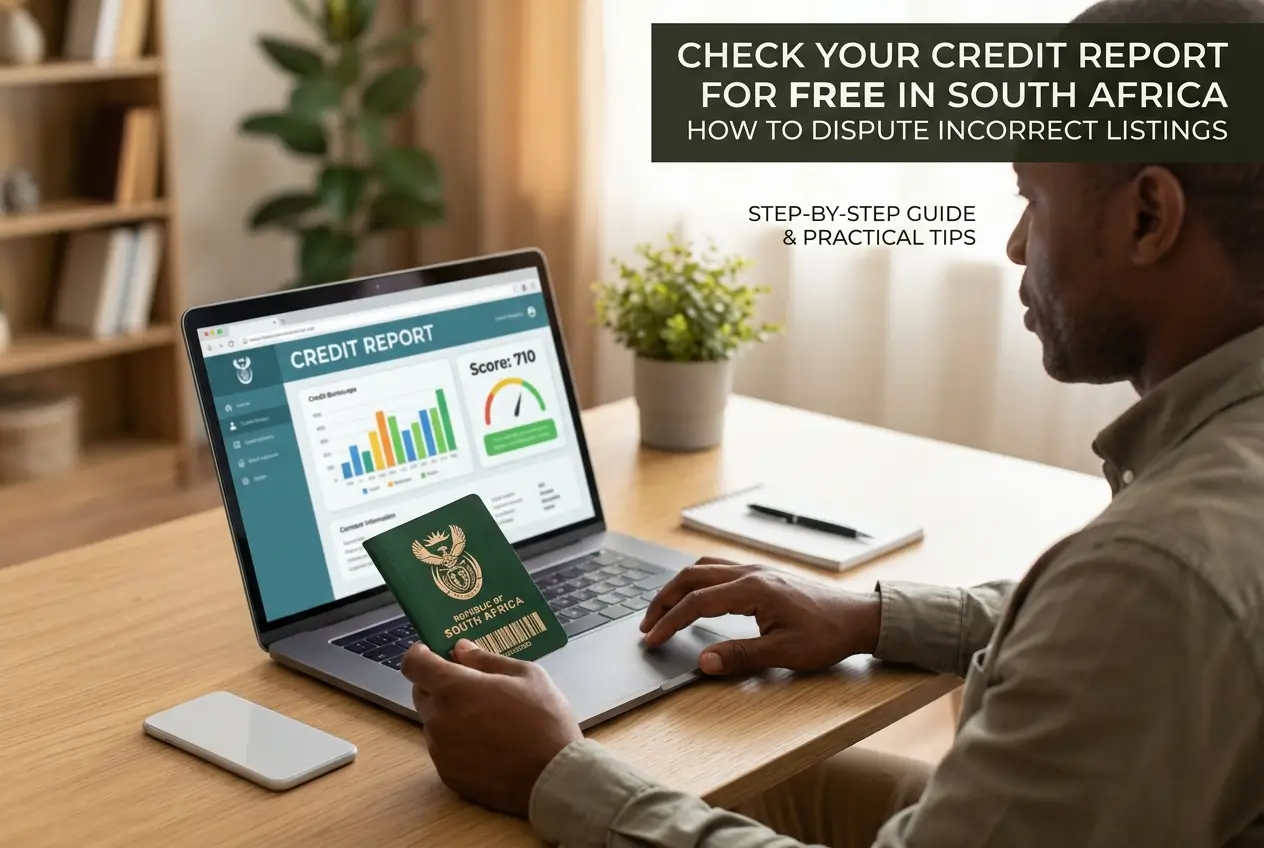
Wondering how to check your credit report for free in South Africa? You have a legal right to access it without paying a cent.
The law ensures you can get one free report from each major credit bureau every 12 months. This is your chance to see what lenders see.
This guide will show you exactly how to get your free report. We also cover the vital steps to dispute and remove incorrect listings that might be hurting you.
Why Your Credit Report Is More Than Just a Number
Think of your credit report as your financial CV. It tells the story of how you manage debt and pay your bills over time.
It’s not just about getting a loan. Landlords, insurers, and even some employers use this information to make decisions about you.
A clean report can open doors to better interest rates on a car or home loan. A report with errors can block you from opportunities you deserve.
Knowing what’s on your report is the first step to taking control of your financial future and fixing any damaging mistakes.
You Are Entitled to One Free Report Every Year
This isn’t a special offer or a promotion. It’s your right under the National Credit Act (NCA) 34 of 2005.
This law was put in place to protect consumers and promote a fair credit market. It empowers you to stay informed about your credit status.
South Africa has several registered credit bureaus. The main ones hold the information that lenders check.
- TransUnion: One of the largest and most well-known bureaus.
- Experian: A global player with a significant presence in SA.
- Compuscan: Now part of Experian, but still a key database.
- XDS (Xpert Decision Systems): Another major bureau used by many credit providers.
You can request your free report from each of these bureaus once every year. Checking one doesn’t stop you from checking the others.
How to Get Your Free Credit Report: Step-by-Step
Getting your report is usually done online or over the phone. You will need to provide your personal information to verify your identity.
Be ready with your South African ID number, full name, address, and contact details. The process is designed to be secure.
| Credit Bureau | How to Access Free Report |
|---|---|
| TransUnion | Visit their website (transunion.co.za) and follow the links for your free report. You can also call them. |
| Experian | Go to their website (experian.co.za). They offer a free statutory report and other credit services. |
| Compuscan | As part of Experian, you can access your data via the Experian portal or the MyCreditCheck website. |
| XDS | Visit their website (xds.co.za) and look for the consumer services or personal credit report section. |
Some bureaus have apps like ClearScore that partner with them to provide ongoing access to your report and score for free.
What to Look For When You Check Your Report
Your credit report contains a lot of information. Don’t feel overwhelmed. Focus on checking these key areas for accuracy.
- Personal Details: Is your name, ID number, and address correct? Outdated information can cause confusion.
- Account History: Review all listed accounts (loans, credit cards, store cards). Do you recognise all of them?
- Payment History: Check the record of your payments. Are there any late payments listed that you actually paid on time?
- Negative Listings: Look for any defaults, judgements, or administration orders. These have a serious impact.
- Credit Enquiries: See who has been looking at your report. Unauthorised checks could be a sign of identity fraud.
Expert Tip: Get your report from at least two different bureaus. Sometimes a mistake might only show up on one of them.
Found a Mistake? How to Dispute Incorrect Listings
Discovering an error on your report can be stressful, but you have the right to challenge it. The process is called a dispute.
You must log the dispute directly with the credit bureau that has the incorrect information listed. They are required by law to investigate it.
- Contact the Bureau: Go to the bureau’s website and find their “Disputes” section. They will have a specific form or process to follow.
- State Your Case Clearly: Explain exactly what information is wrong and why. Provide as much detail as possible.
- Provide Proof: If you have documents to support your claim (like a settlement letter or proof of payment), submit them. This speeds things up.
- Get a Reference Number: The bureau must give you a reference number for your dispute. Keep this number safe. It is your proof of logging the query.
Never pay a third party to log a dispute for you. This is a free service that you can and should do yourself.
Common Mistakes on Credit Reports and How They Happen
Mistakes can happen for many reasons, from simple admin errors to serious cases of fraud. Knowing the common ones helps you spot them faster.
- Accounts Not Yours: An account opened by a fraudster using your stolen ID number. This is a red flag for identity theft.
- Incorrect Balances: An account showing you owe more than you actually do, or a paid-off account still showing a balance.
- Outdated Negative Info: A default or judgement should be removed after a certain period. Sometimes they remain listed incorrectly.
- Clerical Errors: Simple mistakes like a misspelled name or wrong address, which can link you to someone else’s debt.
- Duplicate Accounts: The same debt listed twice, making your total debt appear much higher than it is.
These errors are not your fault, but they become your problem if you don’t take action to get them fixed.
What Happens After You Log a Dispute?
Once you’ve submitted your dispute and received a reference number, the clock starts ticking for the credit bureau.
By law, the bureau has 20 business days to investigate your claim. They will contact the credit provider who supplied the information to get their side.
During the investigation, the disputed listing is often marked on your report, so anyone checking it knows it’s under review.
If the bureau finds the information is incorrect, they must remove it or correct it. They have to send you written confirmation of the outcome.
If the credit provider insists the information is correct, the bureau must also inform you of this and provide the provider’s details.
If you’re unhappy with the result, you can take your case to the Credit Ombud for an independent review.
Tips to Protect and Improve Your Credit Health
Fixing errors is one part of the job. The other is building a positive credit history for the future. Small habits make a big difference.
- Pay on Time, Every Time: Your payment history is the single biggest factor in your credit score. Even paying one day late can be recorded.
- Use Credit Responsibly: Avoid maxing out your credit cards. Try to keep your balances below 30% of your total credit limit.
- Check Your Report Annually: Make it a yearly routine. Set a reminder on your phone so you don’t forget your free check-up.
- Protect Your ID: Be very careful about who you share your ID number with. This is the key fraudsters need to open accounts in your name.
- Communicate with Lenders: If you’re struggling to make a payment, call the credit provider before the due date. They may be able to help with a plan.
Taking charge of your credit report is a powerful step towards financial wellness. Use this guide to check yours and ensure your story is told correctly.