Need a Police Clearance Certificate (PCC) in South Africa? You are in the right place. This document is essential for many jobs and visa applications.
Getting it can seem complicated, but it doesn’t have to be. We will guide you through every step of the process.
This article explains the requirements, fees, and how long it takes. Let’s get your application sorted out quickly and correctly.
What Exactly Is a Police Clearance Certificate?
A Police Clearance Certificate is an official document issued by the South African Police Service (SAPS).
It confirms whether you have any criminal convictions recorded against your name in South Africa. Think of it as an official background check.
The certificate is a crucial requirement for many official processes, both inside and outside the country.
Why You Might Need a Police Clearance Certificate
You might be surprised how often a PCC is required. It’s not just for people with a criminal history; it’s to prove you don’t have one.
Here are the most common reasons people apply for a PCC:
- Emigration and Visas: Most countries require a PCC when you apply for residency or a long-term visa.
- International Work Permits: If you plan to work abroad, your future employer or the host country will likely ask for one.
- Certain Jobs in SA: Roles in finance, security, education, or government often require a PCC as part of the hiring process.
- Adoption Procedures: To ensure a safe environment for a child, a police clearance is a standard requirement for adoptions.
- Professional Licenses: Some professional bodies require a clearance certificate before granting or renewing a license to practice.
The Step-by-Step Application Process in South Africa
Following the correct steps is key to avoiding delays. The process is straightforward if you know what to do. Here’s a simple breakdown.
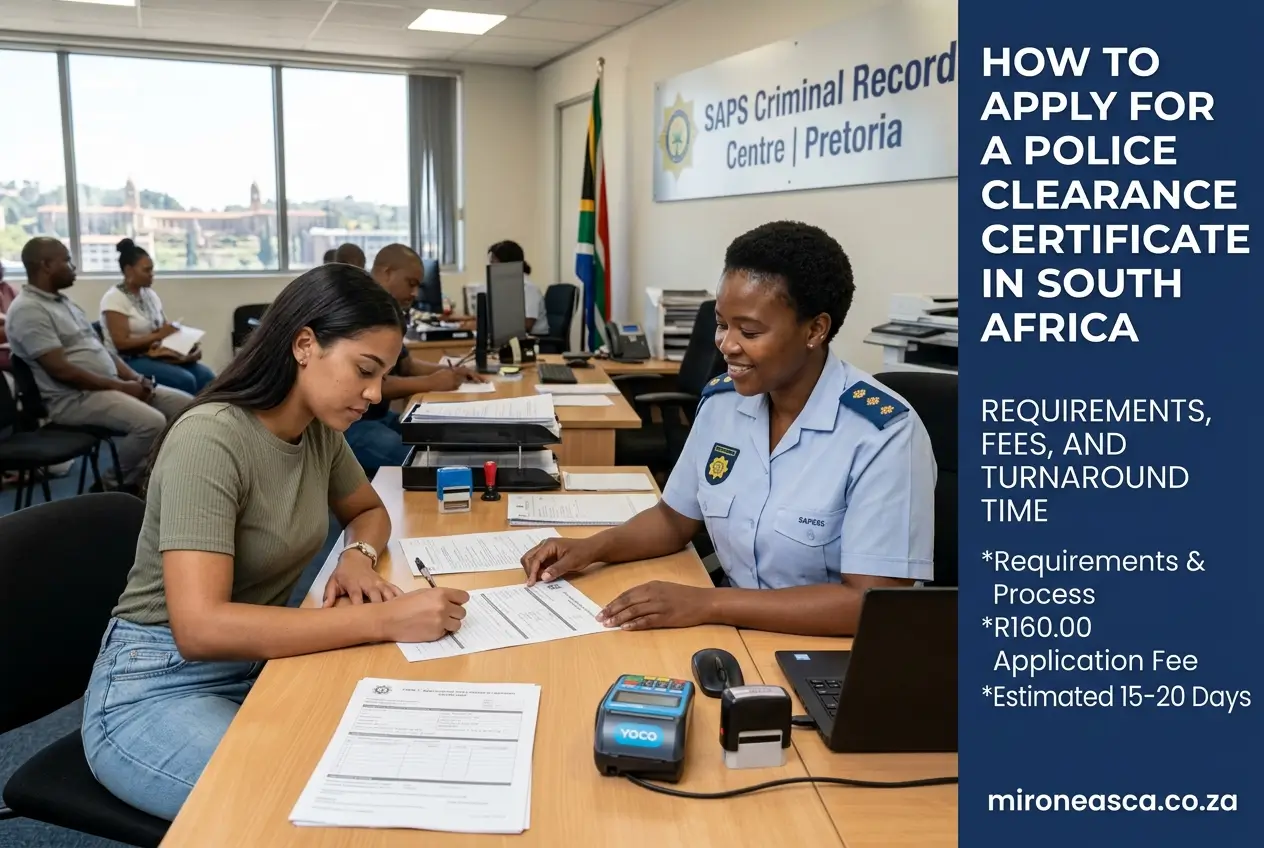
- Get the Application Form: Visit any police station in South Africa and ask for the SAPS 91(a) application form.
- Get Your Fingerprints Taken: A police officer must take your fingerprints. This is done on the SAPS 91(a) form itself.
- Make the Payment: You need to pay the application fee before submitting your documents. We cover the cost and how to pay below.
- Prepare Your Documents: Make a clear, certified copy of your South African ID document or valid passport.
- Submit Your Application: Go back to the police station with your completed form, certified ID copy, and proof of payment.
Pro Tip: Go to the police station early in the morning to avoid long queues, especially for fingerprinting.
Essential Documents and Requirements Checklist
To ensure your application is processed smoothly, you must have all the correct documents ready. Missing just one item can cause major delays.
Here is your checklist. Make sure you have everything before you go to the police station to submit.
- Completed SAPS 91(a) Form: Ensure all sections are filled in correctly and your fingerprints are clear.
- Certified ID/Passport Copy: A clear copy of your South African ID book/card or valid passport. It must be certified.
- Proof of Payment: The original bank deposit slip or a printed receipt of your Electronic Fund Transfer (EFT).
- Your Actual ID/Passport: Take your original document with you, as the officer may need to verify it against the copy.
Remember to certify your ID or passport copy at a police station or a Commissioner of Oaths. This service is usually free at any SAPS station.
Understanding the Fees and Payment Methods
The fee for a Police Clearance Certificate is set by SAPS and must be paid before you submit your application.
The current application fee is R150.00 per certificate. This fee is non-refundable, even if your application is rejected for errors.
You cannot pay cash at the police station. Payment must be made directly to the SAPS bank account via EFT or a bank deposit.
Crucial Payment Information: When making the payment, your reference must be your last name and initial, or your ID number. This is vital.
Always double-check the official SAPS website for the latest banking details before making a payment, as these can sometimes change.
How Long Does It Take? Turnaround Times Explained
Patience is very important when waiting for your PCC. The processing time can vary significantly depending on the volume of applications.
The official estimated turnaround time is between six to eight weeks from the day your application is received in Pretoria.
However, be prepared for potential delays. It’s common for the process to take longer due to backlogs at the Criminal Record Centre.
If you have a strict deadline for an employer or embassy, it is highly recommended that you apply several months in advance.
Do not wait until the last minute. The stress of a looming deadline combined with potential delays is something you want to avoid.
Applying for a PCC from Outside South Africa
What if you are a South African living abroad? You can still apply for a PCC without returning to the country.
The process is slightly different. You will need to handle your application through the nearest South African Embassy, High Commission, or Consulate.
Here’s how it generally works:
- Get Fingerprints Locally: You must get your fingerprints taken at a local police station in the country where you are residing.
- Submit at the Embassy: Take your fingerprint form, application, certified passport copy, and fee to the SA Embassy.
- Courier Your Application: In some cases, you may need to courier your completed application directly to the Criminal Record Centre in Pretoria.
Always check the specific procedure with your local South African mission, as requirements can differ from one country to another.
Common Mistakes to Avoid During Your Application
A small mistake can send your application to the back of the queue. Avoiding these common errors will save you a lot of time and frustration.
- Incorrect Payment Reference: Using the wrong reference means SAPS cannot link your payment to your application. This is a huge problem.
- Unclear Fingerprints: If your fingerprints are smudged or unclear, the application will be rejected. Make sure the officer does a good job.
- Uncertified Document Copies: Your ID or passport copy must be certified. An uncertified copy will be rejected.
- Forgetting Proof of Payment: You must include the original deposit slip or a printed EFT confirmation with your documents.
- Not Keeping Copies: Always make a copy of your entire application pack for your own records before you hand it over.
Your Next Steps After Applying
Once you’ve submitted your application, the waiting game begins. The police station where you applied will send your documents to Pretoria.
After about six weeks, you can start following up on the status. You will need to contact the SAPS Criminal Record and Crime Scene Management (CR & CSM).
You can contact them via phone or email, but be prepared for busy lines. Having your ID number and date of submission ready will help.
Once your certificate is ready, it will be sent back to the police station where you applied. You will then need to collect it in person.
You now have the complete roadmap. Take the first step today and get your application process started with confidence.